

Rice is such an amazing seed. It can be grown almost anywhere in the world, and there’s hardly a cuisine that doesn’t incorporate rice into its vision of food. Here in the Lowcountry, when we talk about rice, we’re usually referring to Carolina Gold rice (CGR), scientifically known as Oryza sativa. It gets its name from the golden color of its husk, not its seed. When dehusked, it’s a long-grain white rice with a gloriously distinctive flavor and texture…and it’ll make one heck of a risotto.
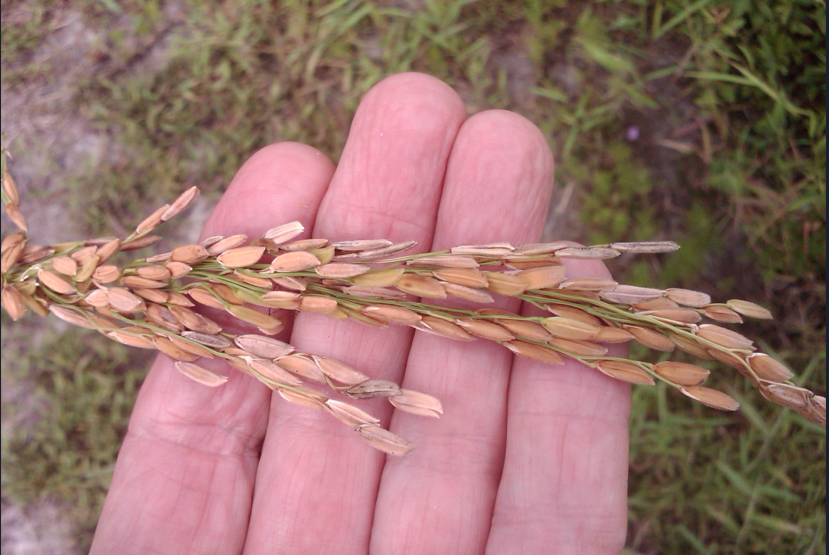
There’s some unpleasantness associated with CGR because of its African origins and the commercial history of early colonial fortunes being built on its cultivation by enslaved labor. That history clings to the rice as it does to the history of South Carolina itself, and CGR remains a staple of Gullah cooking. Folks growing CGR today are for the most part modestly sized farmers dedicated to the restoration of an heirloom seed and respectfully proud of their role in bringing CGR back to the plates and purloo pots of the Lowcountry.
I started growing CGR on my farm almost two decades ago. The original purpose was to attract ducks. Ducks love rice, particularly when the immature kernels are soft and milky. I remember the first year when our crop was maturing in mid-August. I drove by the rice field, and it exploded with ducks. Dozens of wood ducks lit out for the hardwood creek bottom that makes the entire southern boundary of the property. A cloud of teal took off in multiple directions…and they were back a day later. I let out an enthusiastic expletive that I will omit from this writing…after all, it’s a family-oriented blog.
You might wonder where we get the water to flood the fields. Our way of growing rice is the old upland cultivation method, not the tidal flooding method used on the rivers of the coast. Fortunately, we have flowing water from a branch, which fills a large pond. A gravity-feed flow pipe brings the water from the pond to the rice fields. We don’t use pumps or any gas motors. The rain brings us water, and gravity takes it from there. When we drain the fields, the water runs into Cypress Creek and then on into the Coosawhatchie River. We don’t spray chemicals, so the water leaving our fields when we drain them is as clean as the rain that brought it.
A fun thing about our rice growing is the tractor-towed combine we use to harvest the crop. It’s approximately eighty years old, and it squeaks, shakes, and shimmies. Occasionally, parts fall off, but despite its cantankerous personality, it does the job. I see it as an old mule that grumpily accepts it will eventually have to do some work while letting you know it’s not happy about it. After I ride the combine to monitor the flow of rice seed, I have to check to see if all my teeth are still in place. So far, so good.
Growing rice is certainly not all fun and games. The tricky part is preparing for the harvest. We must drain the water from the field and let the soil dry well enough to support the weight of the combine and tractor pulling it. That process usually occurs during the peak of hurricane season. For the week it takes to dry the field, we hold our breath that no serious weather will damage the fragile crop. We’ve experienced catastrophic loss when a hurricane blew in and flattened the vulnerable rice plants, making them unharvestable. Talk about a sad moment to watch an entire season’s work blown down in a day. All we could do was let the remnants dry out and burn the field.

No account of growing rice in the Lowcountry would be complete without a shout-out to the team at Anson Mills led by its founder, Glenn Roberts. Glenn is passionate about preserving heirloom grains and related food recipes, and his passion rubs off on folks like me. He patiently mentored me in the early days of our learning curve, and he is a cheerleader for the things we try to do on the farm. Thank you, Glenn! OBTW, if you want to savor a truly yummy risotto, grab yourself some CGR and follow Glenn’s recipe here.
As I write this, it’s early September. We are drying the field and keeping our eyes on the weather. The combine is being oiled and checked. We can already tell what it’s thinking, and we know it’s planning revenge. And so it goes on the farm. Never a dull moment, and never a minute when we’re not looking at the sky.
